
Why Energy Matters More than Motivation
Why Energy Matters More Than Motivation
In conversations about health, motivation is often treated as the most important factor.
People ask themselves why they cannot stay motivated to exercise, sleep more, or take care of themselves.
But motivation is not the true foundation of health.
Energy is.
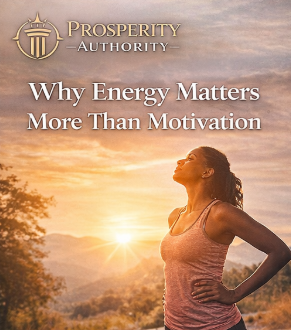
When energy is depleted, even the most disciplined person struggles to maintain healthy habits.
Many people are aware when their energy is declining.
They feel the fatigue.
They notice the stress.
They recognize the early signs of burnout.
Yet awareness alone does not restore energy.
Energy requires sustainable rhythms.
The S.U.S.T.A.I.N. Energy Framework focuses on building those rhythms through intentional practices.
S — Scan Your Signals
The body constantly communicates signals about energy levels.
Examples include:
fatigue
stress
difficulty concentrating
disrupted sleep
The first step toward sustainable health is learning to notice these signals before burnout develops.
Reflection question:
What signals does your body give when your energy is declining?
U — Understand Your Energy Sources
Energy is influenced by multiple factors including:
sleep quality
nutrition
movement
emotional stress
work demands
Understanding what restores and what drains your energy allows you to make intentional adjustments.
Reflection question:
Which daily activities increase your energy? Which decrease it?
S — Stabilize Your Foundations
Sustainable health requires consistent foundational habits, including:
regular sleep schedules
balanced nutrition
physical movement
mental recovery
Small, consistent practices create stability over time.
Reflection question:
Which foundational habit would most improve your energy right now?
T — Track Your Patterns
Tracking energy patterns increases awareness and accountability.
Consider monitoring:
sleep hours
energy levels throughout the day
stress levels
exercise frequency
Patterns often reveal the causes of energy decline.
Reflection question:
When during the day do you feel most energized?
A — Adjust Your Habits
Health habits should evolve as circumstances change.
Adjustments may include:
modifying work schedules
adding recovery time
improving sleep routines
increasing movement
Flexibility allows sustainable progress.
Reflection question:
What small habit adjustment could improve your well-being this week?
I — Integrate Sustainable Rhythms
Health becomes sustainable when supportive behaviors become part of daily routines.
Examples include:
consistent sleep and wake times
regular physical activity
structured recovery periods
Integration transforms effort into lifestyle.
Reflection question:
What healthy routine would you like to integrate into your week?
N — Normalize Energy Stewardship
Taking care of personal energy should not feel like a luxury.
It is a necessary practice that allows individuals to contribute meaningfully in their careers, relationships, and communities.
When energy stewardship becomes normal, long-term well-being becomes achievable.
Reflection question:
What would change if you treated your energy as your most valuable resource?
Health is not built in moments of inspiration.
It is built through patterns that support long-term vitality.
Energy is the foundation that supports every other pillar of prosperity.
Without it, progress becomes difficult to maintain.
Awareness shows the gap.
Structure restores balance.

